
















 Features & Benefits
 Features & Benefits
 Features & Benefits
 Features & Benefits
 Features & Benefits
 Features & Benefits
 Features & Benefits
 Features & Benefits
 Features & Benefits
 Features & Benefits
 Features & Benefits
 Features & Benefits
 Features & Benefits
 Features & Benefits
 Features & Benefits
 Features & Benefits
Features & Benefits
 Features & Benefits
 Features & Benefits
 Features & Benefits
 Features & Benefits
Features & Benefits
 Features & Benefits
 Features & Benefits
 Features & Benefits
 Features & Benefits
 Features & Benefits
 Features & Benefits
 Features & Benefits
 Features & Benefits
 Features & Benefits
Features & Benefits
 Features & Benefits
 Features & Benefits
 Features & Benefits
 Features & Benefits
 Features & Benefits
 Features & Benefits
 Features & Benefits
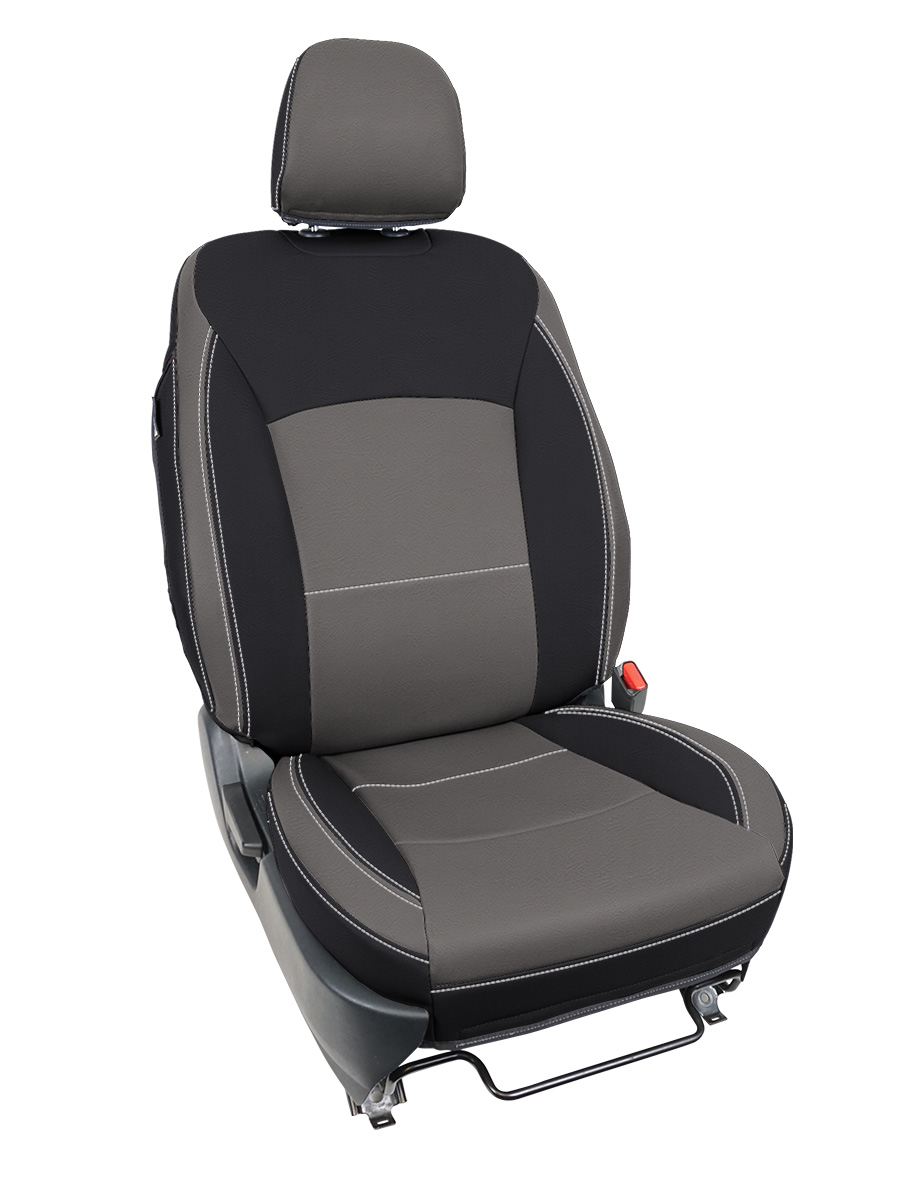 Features & Benefits
 Features & Benefits
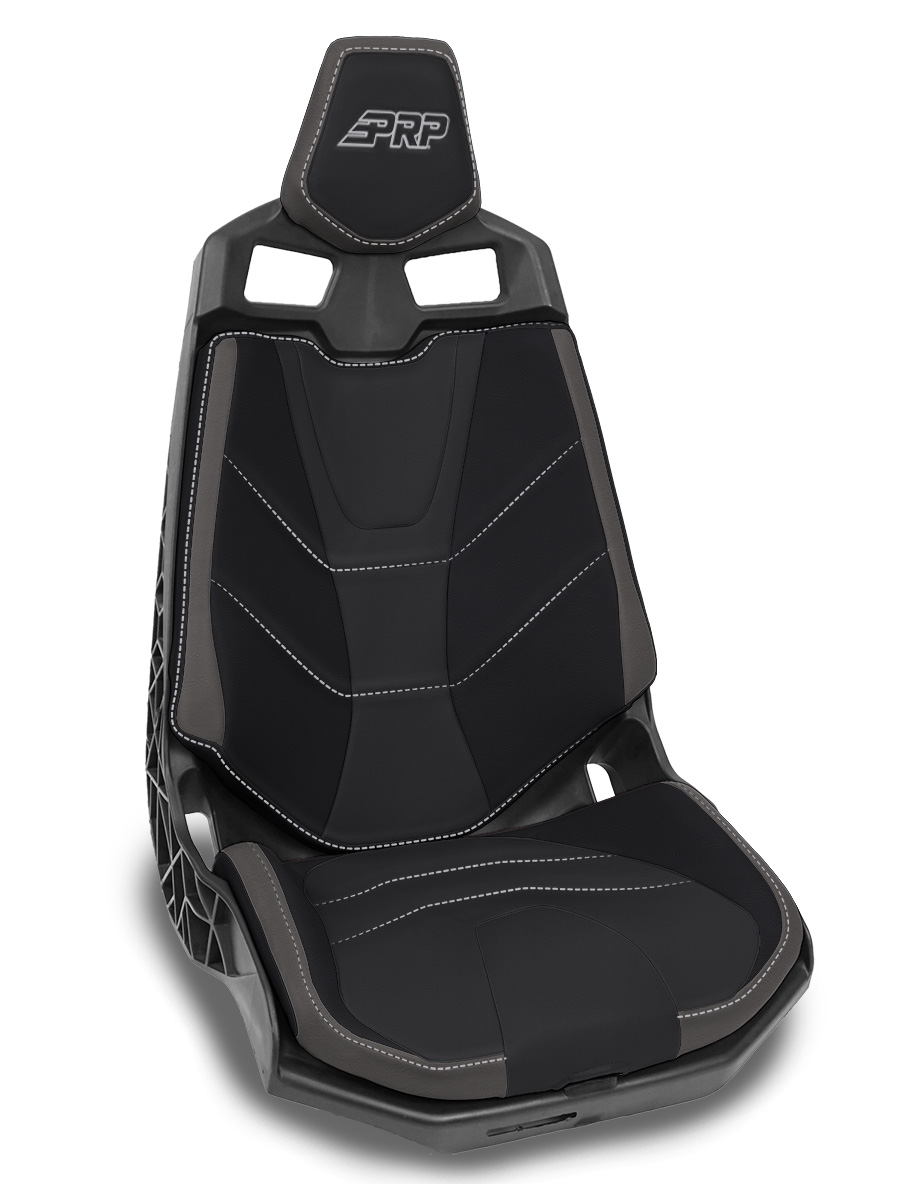 Features & Benefits
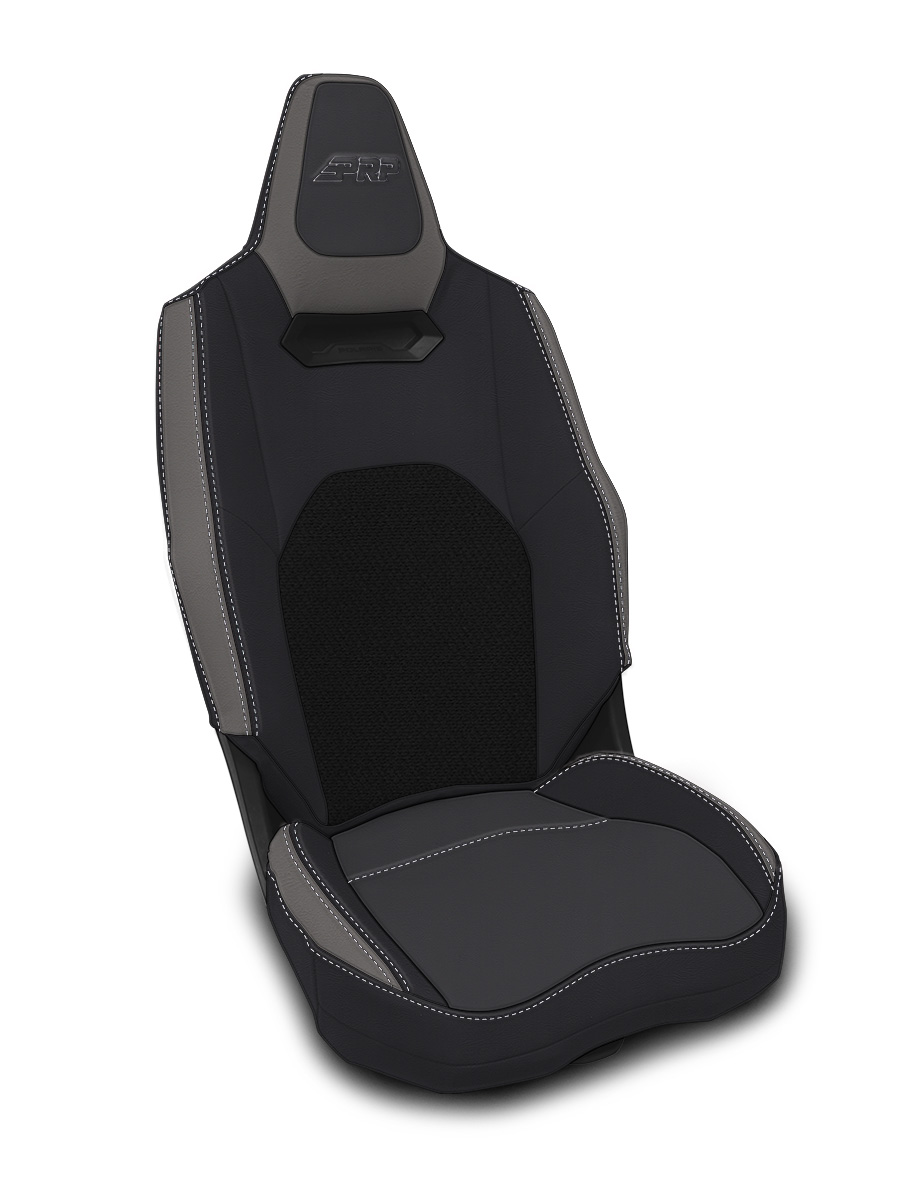 Features & Benefits
 Features & Benefits
 Features & Benefits
 Features & Benefits
 Features & Benefits
 Features & Benefits
 Features & Benefits
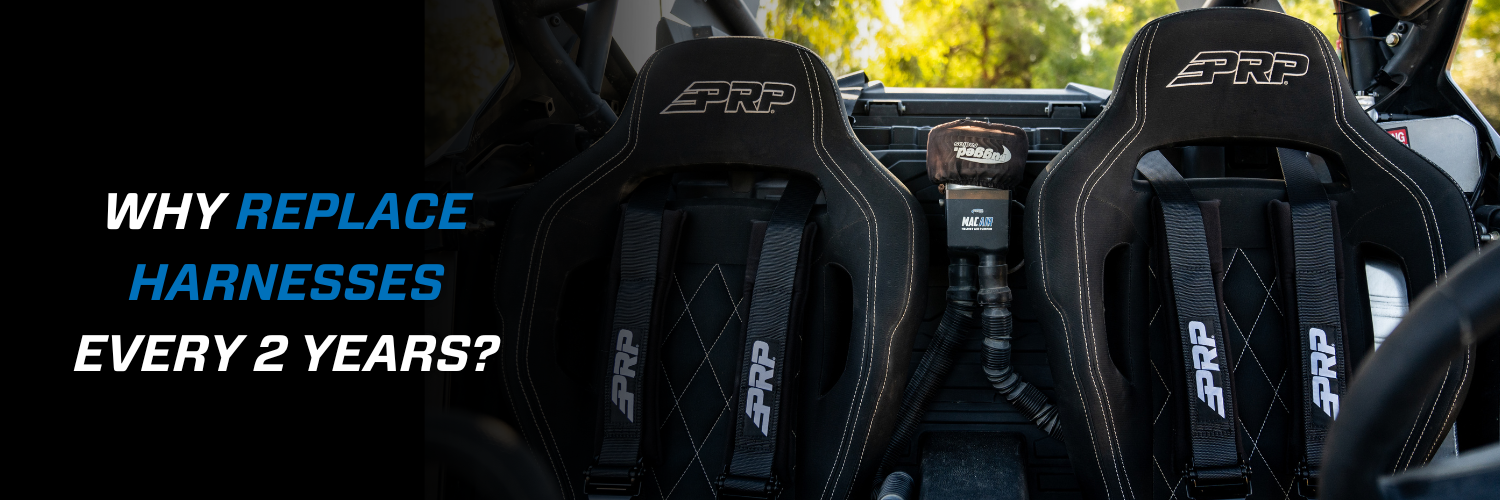
Off-road enthusiasts hear it all the time: replace your harnesses every two years. For racers, it’s non-negotiable. If your harness doesn’t have a current SFI tag, you won’t pass tech. But for recreational drivers, the rule often raises questions.
Why two years?
Are harnesses actually unsafe after that point?
If you’re not racing, does it really matter?
Let’s break down why harness expiration exists, what SFI standards actually mean, and how UV exposure and material degradation affect your safety whether you’re racing or just out enjoying the trails.
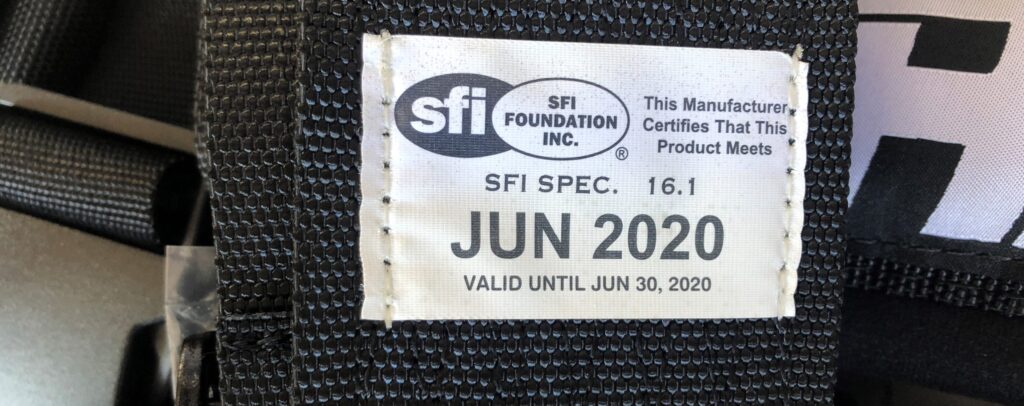
SFI stands for the SFI Foundation, a non-profit organization that establishes and enforces safety standards for motorsports equipment in North America. Their job is simple but critical: ensure safety equipment performs as intended during real-world crashes.
When a harness is SFI certified, it means:
The materials have been tested
The harness assembly meets minimum strength requirements
The product performs under extreme loads
If you’re purchasing safety equipment for off-road racing or recreation, SFI tags are not optional they’re essential.
If you’re racing or planning to race, explore our SFI-certified race harnesses built to meet off-road sanction requirements and pass tech with confidence!
The two-year lifespan comes directly from SFI testing data, not guesswork. Over time, harness webbing loses strength, primarily due to UV exposure.
SFI expiration dates ensure:
The harness still meets minimum breaking strength requirements
The webbing hasn’t degraded beyond safe limits
Racers are using equipment proven to protect them at high speeds
For racing, an expired SFI tag means automatic failure at tech inspection. But the underlying reason applies to everyone, not just racers.
Even if you don’t race, upgrading to a high-quality recreational harness helps ensure your belts are strong, reliable, and ready when it matters most.
SFI offers multiple harness certifications depending on application:
SFI 16.1 – Most common for off-road racing
SFI 16.2 – Higher load requirements
SFI 16.5 – Designed for 2-inch harness systems
Most off-road racing organizations require SFI 16.1, so that’s what we’ll focus on.
Not sure which certification you need? Our Harness Buying & Fitment Guide breaks down SFI ratings, belt widths, mounting styles, and vehicle compatibility.
To receive SFI 16.1 certification, manufacturers submit:
A complete 5- or 6-point harness
Extra webbing samples for testing
Lap & shoulder belts:
Minimum breaking strength: 6,300 lbs
Sub straps:
Minimum breaking strength: 1,500 lbs
Harness assembly test:
Load applied using a torso-simulating body block
5,750 lbs applied to laps and shoulders
These numbers are based on real crash forces encountered during off-road racing.
Our race harnesses are engineered and tested to meet these SFI standards, giving you confidence at speed and under impact.
While the average driver weighs around 160 lbs, crash forces multiply rapidly based on:
Vehicle speed
Sudden stopping distance
Vehicle mass
Using real-world physics data:
A 160 lb driver
Traveling 35 mph
With a stopping distance of 1 foot
Produces approximately 6,556 lbs of force on the harness.
That’s enough to exceed SFI minimums, and that’s at relatively low speeds. Most off-road vehicles operate well beyond that.
Harness webbing degrades over time, and UV exposure is the #1 cause.
Think of a lawn chair left outside for years. The fabric fades, frays, and weakens. Harness webbing behaves the same way.
SFI conducted extensive testing on:
Nylon vs Polyester
3-inch vs 2-inch webbing
New material vs UV-exposed material
Their UV test simulates:
600 hours total exposure
400 hours direct sunlight
Equivalent to 80% of a year in Miami, Florida
That’s less exposure than many off-road vehicles see in real life.
New Materials
Nylon: 10,549 lbs
Polyester: 10,399 lbs
After UV Exposure
Nylon: 5,039 lbs (52% loss)
Polyester: 8,056 lbs (23% loss)
SFI minimum requirement: 6,300 lbs
Only polyester passed after UV exposure
New Materials
Nylon: 5,723 lbs (Fails immediately)
Polyester: 7,151 lbs
After UV Exposure
Nylon: 2,712 lbs (53% loss)
Polyester: 4,145 lbs (42% loss)
Both fail after UV exposure.
UV exposure dramatically reduces harness strength
Nylon degrades faster than polyester
2-inch webbing loses strength much faster than 3-inch
Polyester 3-inch webbing performs best long-term
This is why most off-road racing organizations require 3-inch polyester harnesses.
This is one of the most common statements in off-road culture—and one of the most dangerous.
The data shows that:
Harnesses can lose 40–50% of their strength in just two years
A 10-year-old harness is far below safe limits
Strength loss affects racing and recreational drivers equally
Even moderate-speed crashes generate massive force. Old harnesses simply cannot perform as designed.
Youth drivers require special consideration:
Smaller body sizes
Lower seating positions
Different belt geometry requirements
Many youth classes allow 2-inch harnesses, but proper fit and certification are critical.
Learn more in our Best Harnesses for Kids blog, where we break down belt widths, sizing, certifications, and safety considerations for youth racers and recreational riders.
Short answer: yes.
Even if you’re not racing:
UV degradation still occurs
Crash forces are still extreme
Harness failure doesn’t care if you’re competing or trail riding
SFI expiration exists for racing enforcement, but the physics apply to everyone.
Weston Niner / 5.3 Harness
Most modern harnesses feature UV-treated webbing, which slows degradation, but does not stop it entirely.
Incorrect belt angles can:
Reduce load capacity
Cause uneven force distribution
Increase risk of belt failure
Always aim for proper mounting angles and flat pull paths.
Nylon absorbs moisture and loses strength
Polyester repels water and retains elasticity
Polyester is now the industry standard for off-road harnesses
In off-road racing and recreation, crashes are inevitable. We’ve all seen the videos. We’ve all seen the aftermath.
Your harness is one of the few things between you and serious injury.
Before your next trip:
Inspect your belts
Check installation angles
Tighten straps correctly
Verify your SFI expiration date
A harness is designed to protect you once it matters most. Make sure it’s capable of doing its job.
If you need any help, or have any questions, feel free to give us a call at 1.800.317.6253 or email us anytime at [email protected]
| Cookie | Duration | Description |
|---|---|---|
| cookielawinfo-checkbox-analytics | 11 months | This cookie is set by GDPR Cookie Consent plugin. The cookie is used to store the user consent for the cookies in the category "Analytics". |
| cookielawinfo-checkbox-functional | 11 months | The cookie is set by GDPR cookie consent to record the user consent for the cookies in the category "Functional". |
| cookielawinfo-checkbox-necessary | 1 year | This cookie is set by GDPR Cookie Consent plugin. The cookies is used to store the user consent for the cookies in the category "Necessary". |
| cookielawinfo-checkbox-non-necessary | 1 year | GDPR Cookie Consent plugin sets this cookie to record the user consent for the cookies in the "Necessary" category. |
| cookielawinfo-checkbox-others | 1 year | This cookie is set by GDPR Cookie Consent plugin. The cookie is used to store the user consent for the cookies in the category "Other. |
| cookielawinfo-checkbox-performance | 11 months | This cookie is set by GDPR Cookie Consent plugin. The cookie is used to store the user consent for the cookies in the category "Performance". |
| viewed_cookie_policy | 11 months | The cookie is set by the GDPR Cookie Consent plugin and is used to store whether or not user has consented to the use of cookies. It does not store any personal data. |